



How to Choose the Right Silicone Rubber for Mould Making
If you’re asking “Which silicone should I buy?”, you’re not alone. Most mould-making problems come from picking the wrong silicone for the job, not technique.
This guide is for Australian makers and helps you choose using four key levers: cure type, Shore hardness, pot life, and project type.
Quick Navigation
- Quick product pick
- Platinum vs tin cure
- Shore hardness guide
- Pot life & demould timing
- Project-to-product matching
- FAQ
Silicone Selector (Quick Pick)
Quick product pick (fastest way to choose)
| If you’re doing… | Use this | Why |
|---|---|---|
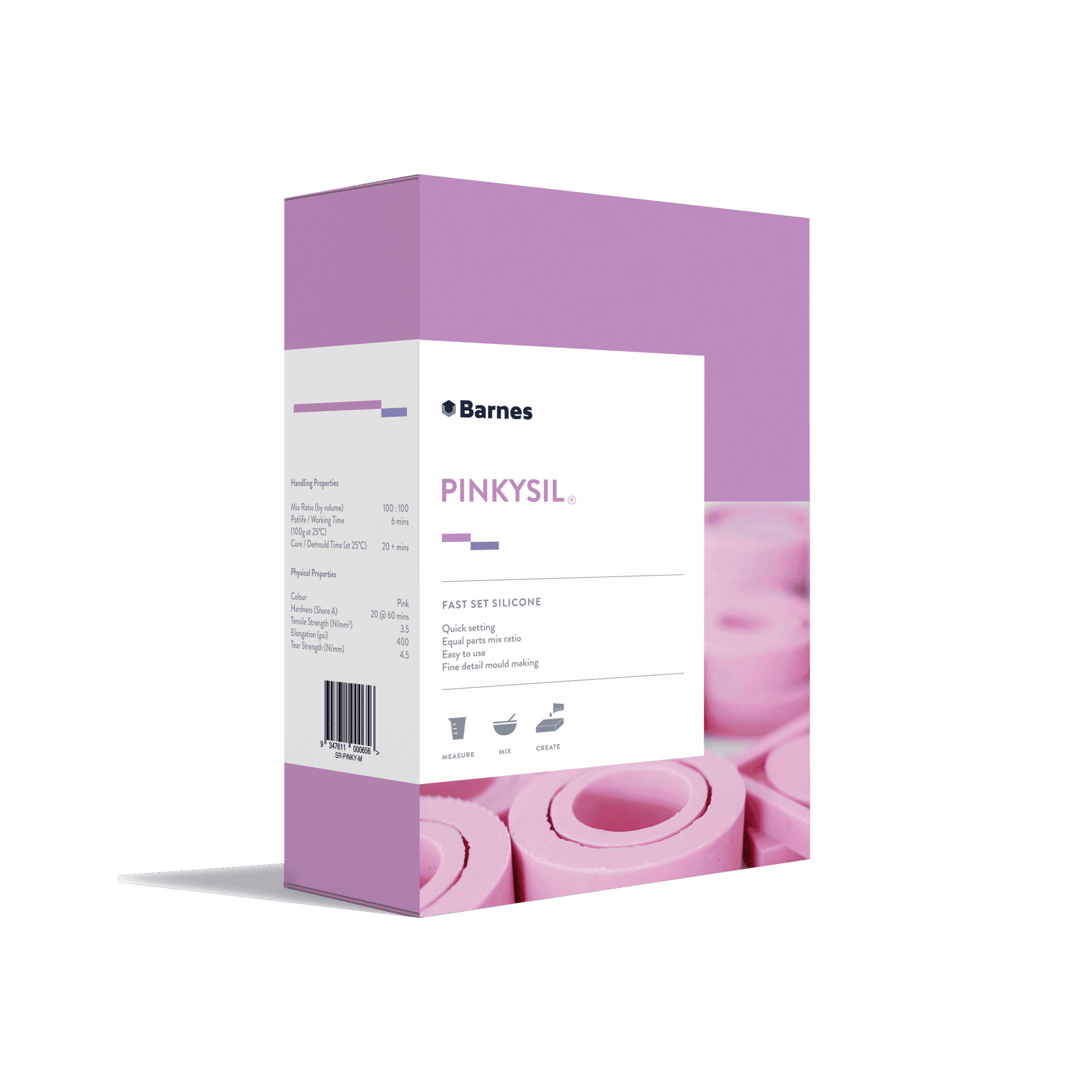
| General mould making | Pinkysil | Fast set, easy 1:1 mix, proven all-rounder |
| Lifecasting / body-safe work | Pinkysil ODDBOD | Skin-safe, for lifecasting and body casting |
| Quick press/push moulds | Pinkysil Putty | No pour box required, fast setup |
| Need to see through mould | Transil / Transil 5A | Translucent for visual fill checks |
| Industrial/specialist moulding | Vario 15/40, RTV3428, M4503/T51, Tufsil 28, Sil-Thix | Specialist cure profiles for industrial use |
Platinum vs tin cure silicone (plain English)
Platinum cure (addition cure)
- Best default for most makers
- Excellent detail and dimensional consistency
- Preferred for lifecasting workflows
Examples: Pinkysil, Pinkysil ODDBOD, Pinkysil Putty, Transil/Transil 5A.
Tin cure (condensation cure)
- Useful in specific industrial/cost-driven contexts
- Different cure behaviour and long-term stability profile
If you’re unsure, start with platinum cure and then optimise from there.
Shore hardness: choose by geometry, not guesswork
- Softer silicone = easier demoulding around undercuts and fine detail
- Firmer silicone = better structural stability in repeated production
Rule of thumb: complex pull-outs and undercuts usually need softer grades. Flat/simple forms can run firmer for longer mould life.
Pot life and demould time: the productivity lever
Pot life is your working window. Demould time is how quickly you can run the next cast.
- Fast turnaround: choose quick-set systems like Pinkysil
- Complex pours: choose longer pot life where needed
Project-to-product matching
Jewellery and small craft moulds
Pinkysil or Pinkysil Putty depending on whether you need pourable or push-mould workflow.
Props and model making
Pinkysil is the default. Move to Transil when visual fill control matters.
Lifecasting and body-safe applications
Use Pinkysil ODDBOD with correct safety process and support materials.
Commercial/industrial runs
Assess Vario 15/40, RTV3428, M4503/T51, Tufsil 28 and use Sil-Thix when vertical control is required.
What’s next?
Need a recommendation for your exact mould? Contact Barnes support and we’ll match your silicone to the project before you buy.
FAQ
What is the best silicone for mould making in Australia?
For most projects, Pinkysil is the best starting point: fast set, 1:1 mix ratio, and excellent detail capture. Use Transil when you need translucency and Pinkysil ODDBOD for lifecasting.
What is the difference between platinum and tin cure silicone?
Platinum cure silicone is generally preferred for cleaner cure, lower shrinkage, and better long-term stability. Tin cure can suit some industrial or cost-driven use cases but behaves differently.
How do I choose Shore hardness for silicone moulds?
Softer silicone is better for undercuts and complex pull-outs. Firmer silicone is better for shape stability and repeated production casting. Match hardness to geometry and demould stress.
How important are pot life and demould time?
Very important. Pot life controls your working window and demould time controls throughput. Shorter cycles are better for production; longer cycles can help with complex pours.
What products should beginners start with?
Pinkysil is the best first choice for general mould making. Pinkysil Putty is ideal for quick push moulds. Transil is useful where visibility through the mould is important.
Can I use these silicones for lifecasting?
Yes. Use Pinkysil ODDBOD for skin-safe lifecasting workflows and always follow SDS guidance and patch-testing protocols.