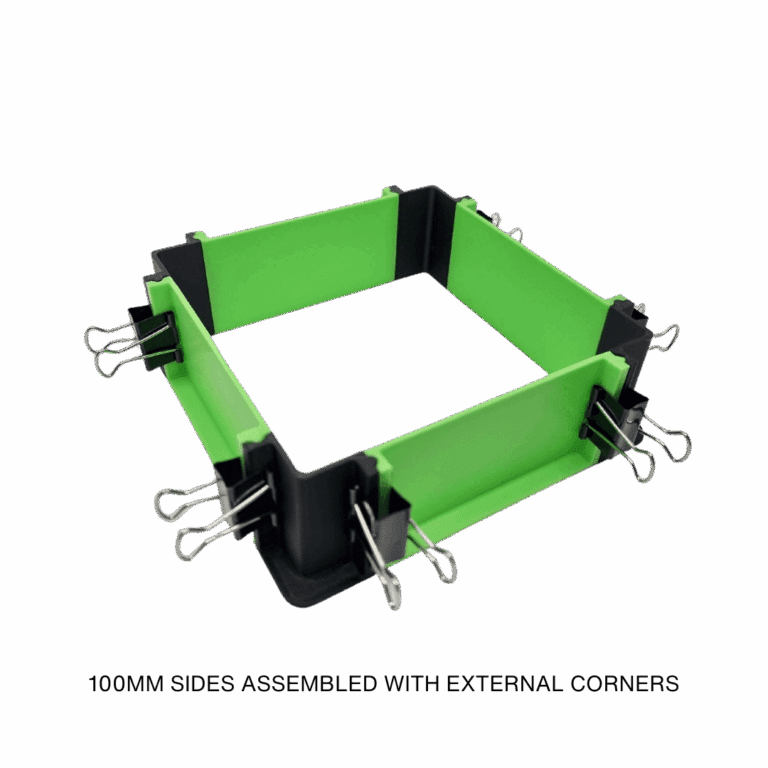
Almost every customer who walks up to our mould-box range pauses on the same question: why would I buy a kit of snap-together pieces when I could just buy one box in the size I need?
It’s a fair question. Modular looks more complicated on the shelf. There are sides in five different heights, two kinds of corners, and a Basic Set sitting next to two fixed-size rounds. If you’ve never made a mould before, the simpler-looking option is the one you reach for.
But the longer you cast, the more obvious it becomes that the modular system isn’t there for flexibility’s sake. It’s there because silicone is expensive, and a fixed-size box almost always forces you to pour more of it than you actually need. Multiply that across a year of casting and the maths gets uncomfortable.
So this is the guide we wish every mould-maker read before their first kit arrived. Whether you’re pouring a one-off keepsake or running a market stall, the same trade-offs apply, you’ll just weigh them differently.
If you’re casting occasionally (or for fun)
Start with the Mould Box Basic Set. It’s the entry point for a reason: a starter combination of modular pieces that lets you build a small rectangular box without having to think too hard about what to add to your cart.
Pour onto the exact piece you’re trying to capture. Don’t try to “practise” with a rough timber offcut and then jump straight to your real master, the geometry of your master object is half the story, and a trial pour on the wrong shape tells you almost nothing useful.
For occasional makers, the value of modular isn’t really about cost savings on silicone. It’s about not owning a cupboard full of single-use boxes. One Basic Set, sensibly stored, will handle most of what a hobbyist throws at it for a long time. Add a four-pack of taller sides later if you discover you want to cast something deeper.
And before you commit to a big silicone pour, dry-fit the box around your master and measure. Build it 5-10mm clear of the master on every side, no more. That gap is your finished mould wall thickness. Anything bigger is silicone you’re paying for and throwing away.
If you’re casting at volume (or selling finished pieces)
The variables that are nice-to-know for a hobbyist become non-negotiable for a maker producing batches. You’re pouring multiple moulds a week, and every extra millimetre of clearance around your master is silicone you’ve bought and turned into mould wall you’ll never use.
Three things we strongly recommend for production casters:
- Pick a standard wall-thickness and stick to it. Most production moulds run a 5-10mm silicone wall. Pick your number, build every box to that clearance, and your silicone-per-mould cost becomes predictable. Inconsistency here is the single biggest cause of margin creep in a casting business.
- Buy duplicates of the sides and corners you use most. Modular only saves you time if you’re not constantly dismantling one box to build another. If you’re pouring two moulds a week, two boxes’ worth of pieces will pay for themselves quickly in dry-fit-and-pour speed.
- Be honest about what scales. Modular wins on rectangles. For circular pieces, the fixed-size rounds win, and that’s why both exist. Don’t fight the geometry.
We’ll come back to the round-vs-modular question in a minute, because that’s the other place buyers get stuck.
Why modular wins for silicone
This is the section worth slowing down for, because it’s the single biggest reason the modular system exists in the first place.
Silicone is the most expensive consumable in mould-making by a clear margin. A litre of Pinkysil (or any comparable RTV) is not a small line item, and every cubic centimetre you pour ends up either inside the mould wall or wasted in oversized headspace.
A fixed-size mould box, whether it’s a shop-bought one or a DIY timber frame you’ve nailed together, locks you into one set of dimensions. If your master object is 80mm × 60mm and your box is 150mm × 150mm, you’ve just paid for silicone to fill 180% more footprint than you needed. On a 50mm-deep pour, that’s roughly twice the silicone going into one mould.
Do that fifty times in a year and the number gets serious.
Modular sides let you build the box around the master, not the other way around. A finished pour with a 5-10mm wall on every side is the optimum: enough silicone to hold its shape and pull cleanly, no more. Over a year of casting, that’s the difference between buying a 1 kg bag of Pinkysil every two months and buying one every month.
The second hidden cost is reusability. DIY timber boxes warp after a handful of pours, silicone leaks at the seams, the corners pull apart, and you’re rebuilding the box more often than the mould. Modular pieces are made for repeat use. The corners snap, the sides clip, and the same kit that built today’s box will build a different-shaped one tomorrow. Hundreds of pours from one set of pieces is realistic.
And the third, quieter benefit: clean release. A well-fitting modular box pulls apart in seconds at de-mould time. You’re not prying a cured silicone block out of a glued timber frame and bending it out of shape on the way. Less stress on a fresh mould means a longer service life from the silicone too.
Sizing decision tree: which side heights to buy
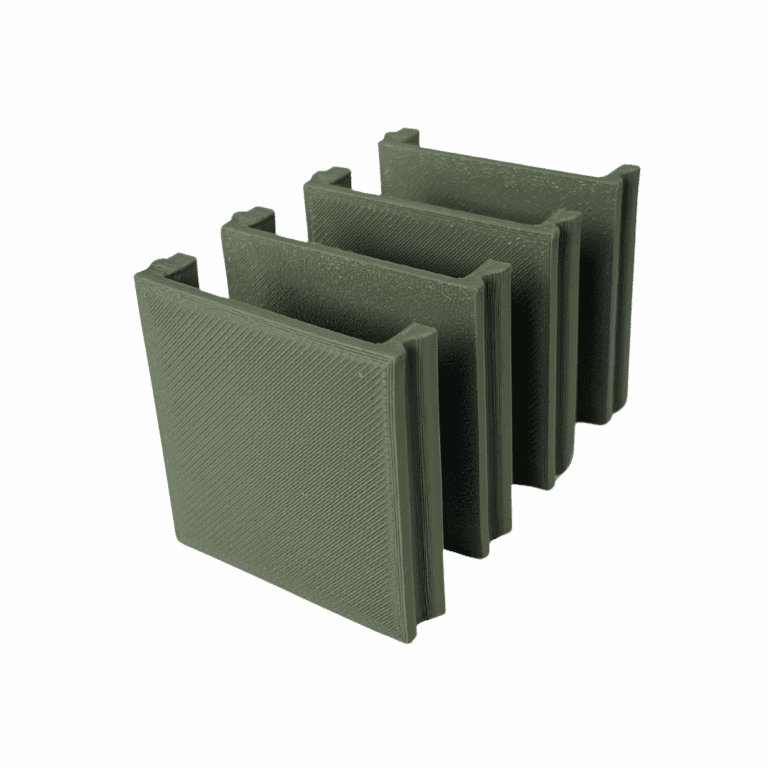
The modular sides come in five heights. Once you know what each one is for, the system makes a lot more sense.
20mm and 30mm sides
These are your shallow-pour heights. Coasters, flat keepsakes, thin relief panels, small decorative tiles, anything where the master is essentially flat and you only need a thin slab of silicone on top.
- 20mm side 4-pack – A$11
- 30mm side 4-pack – A$12
If most of what you cast is flat or near-flat, these will be your most-used pieces.
40mm and 50mm sides
The all-purpose heights. Most sculpture moulds, figurines, jewellery masters with a bit of depth, and the bulk of small-to-medium casting work sit comfortably in this range.
- 40mm side 4-pack – A$13.20
- 50mm side 4-pack – A$16.50
If you’re not sure where to start outside of the Basic Set, a four-pack of 50mm sides is a sensible second purchase. It covers the widest range of casting work.
100mm sides
The deep-pour height. Larger figures, taller jewellery masters, block moulds for layered or stacked casts, and any piece where the master has serious vertical relief.
- 100mm side 4-pack – A$25.30
Most hobbyists won’t need these from day one. Buy them when you have a specific deep-pour project on the bench, not in anticipation.
Corners: internal vs external
This is the bit that confuses people new to the system, so quickly:
- Internal corners (A$15) form the inside right angle of the box, the side that touches your silicone.
- External corners (A$15.40) form the outside right angle, the side that doesn’t.
Most builds use both. The Basic Set includes corner pieces so you don’t have to work it out from a cold start.
When fixed-size actually makes sense
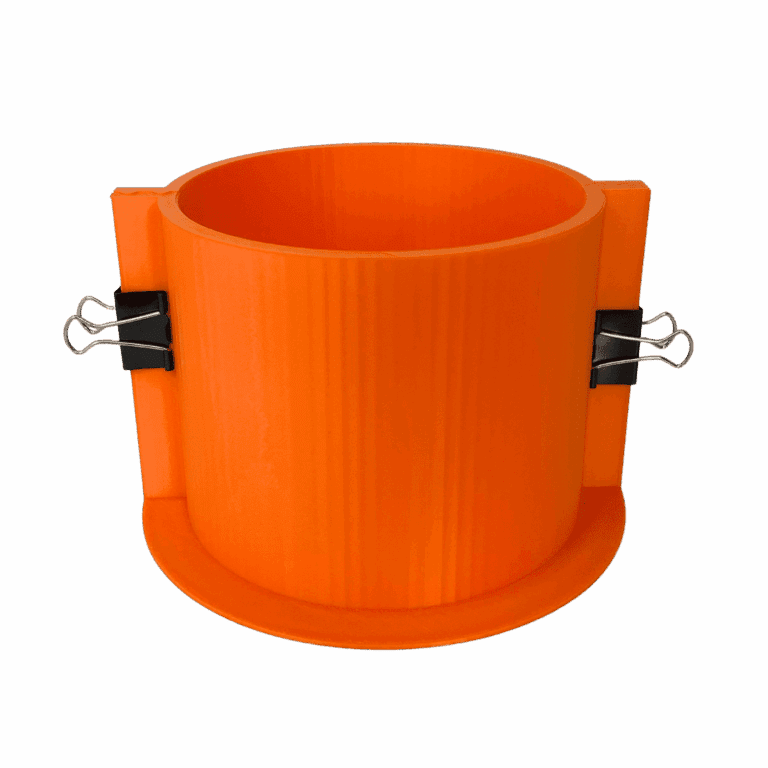
We’d be doing you a disservice if we pretended modular was the right answer for every job. Two scenarios where the fixed-size rounds earn their place:
Round shapes. Modular sides build rectangles. They don’t build circles. If you’re pouring a round coaster, a dish mould, a circular paperweight, or a cake-style decorative piece, you want the 100mm round (A$33) or the 150mm round (A$49.50). They’re sized at 130mm deep, which covers most circular casting work in one piece.
Single-size production runs. If you’ve settled on one specific mould size and you’ll pour it hundreds of times, same dimensions, same master, same finished product, a single fixed box may actually be the cheaper buy. You’re not paying for flexibility you’ll never use.
The honest test: if you can describe the next twelve months of your casting work as “the same size box, over and over,” go fixed. If you can’t, go modular.
What pairs with the boxes
The mould box is one piece of the kit. A few natural pairings, kept short rather than turned into a product dump:
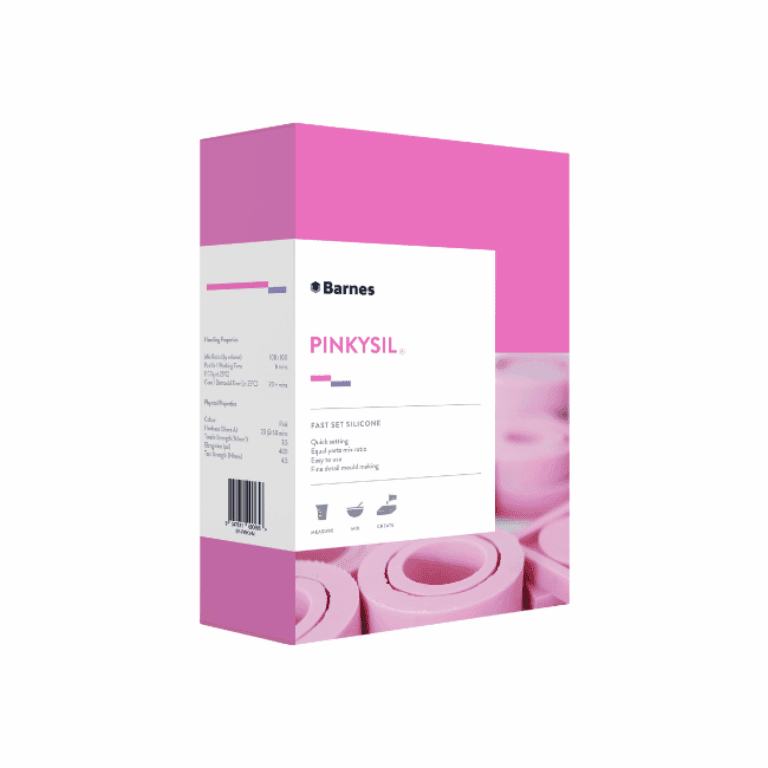
- Silicone: for most makers, Pinkysil Fast Set Silicone is the hero. Fast cure, forgiving 1:1 mix, made for exactly this kind of small-to-medium mould work.
- Release agent: for any porous or detailed master where you want a clean pull, MACWAX Release Agent is the workshop standard.
- Mixing equipment: disposable cups, stir sticks, and a digital scale. Silicone is mixed by weight, not by eye.
That’s the kit. You don’t need anything else to start.
Ready to build?
If you’ve made it this far, you’ve already done the hardest part: understanding why the modular system is shaped the way it is.
- For most makers starting out, the Mould Box Basic Set is the right first buy.
- For rectangular pours of varying sizes, add four-packs of sides as you find the heights you actually use.
- For round pieces, go straight to the 100mm or 150mm round.
- Browse the full Mould Boxes range here, ten SKUs from A$11, all in AU stock with fast dispatch.
If you’d like a hand picking the right pieces for a specific project, drop us a line at [email protected]. We’d rather spend five minutes pointing you at the right combination than have you buy three things you don’t need. That’s the whole point of buying from Barnes: you get the technical answer, not the upsell.
Happy pouring.